
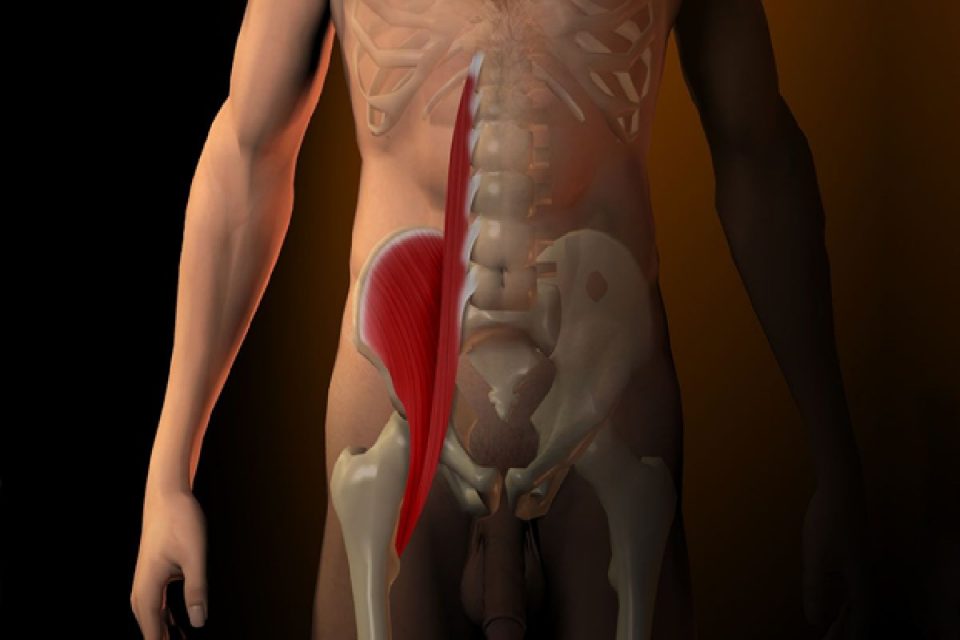
The iliopsoas is a powerful, deep muscle group that plays an important role in hip movement, posture, walking, running, and many sports. It consists of two muscles: the psoas major and the iliacus. Together, they help lift the thigh toward the torso and support movements that involve bending at the hip.
Because the iliopsoas connects the lumbar spine and pelvis to the femur (thigh bone), its function is closely related to hip mobility and lower-back mechanics. Spending long periods sitting or repeatedly performing hip-flexion movements may contribute to discomfort or restricted movement in some people. However, lower-back pain can have many causes, so it should not automatically be attributed to a tight psoas muscle.
Learning how to strengthen and stretch the iliopsoas can help improve hip mobility and movement control. It is also useful to understand how everyday habits may affect your spine health.
Table of Contents
What Does the Iliopsoas Muscle Do?
The iliopsoas is made up of two muscles:
- Psoas major: Originates along the lumbar spine and the lower thoracic region.
- Iliacus: Originates from the inner surface of the ilium, a large bone in the pelvis.
Both muscles join near the hip and attach to the lesser trochanter of the femur.
Their primary function is hip flexion, which means bringing the thigh toward the torso. Depending on the movement, the iliopsoas also contributes to pelvic control and stability during everyday activities.
Although it can influence lower-back mechanics, excessive lumbar curvature is not caused by the iliopsoas alone. Posture, muscle strength, joint structure, and individual movement patterns can all play a role.
Sports and Everyday Movements That Use the Iliopsoas
The iliopsoas is active in many common activities, including:
- Walking and running: Helps move the leg forward during each stride.
- Climbing stairs and hills: Assists in lifting the thigh.
- Soccer and other kicking sports: Contributes to lifting and accelerating the leg.
- Mountain hiking and skiing: Helps control repeated hip-flexion movements.
- Dancing and martial arts: Supports movements that require lifting the knee.
- Getting into and out of a chair: Helps flex the hip.
The muscle works alongside the abdominals, glutes, quadriceps, and other hip muscles. Balanced strength and mobility across these muscle groups are important for comfortable movement.
When Should You Strengthen or Stretch the Iliopsoas?
The right approach depends on your symptoms, mobility, activity level, and strength. Some people benefit from strengthening their hip flexors, while others may need to improve hip extension or address movement restrictions.
Stretching may be helpful when hip extension feels limited. Strengthening may help when lifting the leg is difficult or when greater hip-flexor endurance is needed for sports and daily activities.
Neither approach is appropriate for every type of pain. If you have persistent discomfort, consider consulting a qualified healthcare professional or physiotherapist before beginning a new exercise routine.
Exercises to Strengthen the Iliopsoas
Exercise 1: Lying Leg Raises
Lying leg raises involve the hip flexors, including the iliopsoas, while the abdominal muscles help control the position of the pelvis and spine.
How to do them:
- Lie on your back on a comfortable exercise mat.
- Bend one knee and keep that foot flat on the floor.
- Slowly raise the other leg while keeping it relatively straight.
- Lift only as high as you can without allowing your lower back to arch excessively.
- Lower the leg slowly and repeat on the other side.
Start with a small number of controlled repetitions. If your lower back arches or discomfort increases, reduce the lifting range or choose a gentler exercise.
Exercise 2: Standing Knee Raises
Standing knee raises strengthen the hip flexors and help develop control during movements used in walking, running, and climbing stairs.
How to do them:
- Stand upright with your feet hip-width apart.
- Hold a wall or sturdy chair for balance if needed.
- Slowly raise one knee toward hip height, or as high as is comfortable.
- Keep your torso upright without leaning backward.
- Lower the foot under control and repeat with the opposite leg.
Perform the movement slowly rather than using momentum. You can increase the difficulty gradually by adding light resistance when your technique is consistent.
Exercise 3: Controlled Hip-Flexion Marches
This exercise is useful for building hip-flexor endurance without requiring heavy equipment.
How to do them:
- Stand tall with your feet comfortably apart.
- Tighten your abdominal muscles gently to keep your pelvis steady.
- Lift one knee a short distance.
- Pause briefly, then lower the leg slowly.
- Alternate sides while maintaining balance and controlled breathing.
Avoid leaning backward or swinging your legs. If you experience pain in the hip or lower back, stop and reassess your technique.
Are Sit-Ups and Ball Throws Good Iliopsoas Exercises?
Traditional full sit-ups involve the hip flexors as well as the abdominal muscles. However, they are not an essential exercise for strengthening the iliopsoas, and repeated sit-ups may aggravate symptoms in some people with lower-back discomfort.
Ball throws can involve the hip flexors when they are part of a coordinated athletic movement, but the iliopsoas is only one contributor. These exercises are better introduced as part of a broader training program rather than used as isolated treatments for back pain.
Exercises to Stretch the Iliopsoas
Exercise 1: Supine Pelvic Tilt
A pelvic tilt helps develop awareness and control of the pelvis and lower back. It is not a direct iliopsoas stretch, but it can be a useful starting point before progressing to hip-extension exercises.
How to do it:
- Lie on your back with your knees bent and feet flat on the floor.
- Gently tighten your abdominal muscles.
- Tilt your pelvis so your lower back moves slightly toward the mat.
- Hold for a few seconds while breathing normally.
- Relax and repeat several times.
Keep the movement gentle. Do not force your lower back flat if it feels uncomfortable.
Exercise 2: Half-Kneeling Hip-Flexor Stretch
The half-kneeling stretch directly targets the hip flexors, including the iliopsoas.
<PRIVATE_PERSON> How to do it:
- Kneel on a padded surface with one knee on the floor and the other foot in front.
- Keep your torso upright and gently tighten your abdominal muscles.
- Slightly tuck your pelvis and move your hips forward a small distance.
- Stop when you feel a mild stretch at the front of the hip on the kneeling side.
- Hold for about 15–30 seconds while breathing normally.
- Return to the starting position and switch sides.
Avoid arching your lower back or forcing your hips forward. The stretch should feel controlled, not sharp or painful.
Exercise 3: Supine Knee-to-Chest Stretch
A knee-to-chest stretch primarily targets the glutes and muscles around the hip and lower back. It is not a direct stretch for the iliopsoas, but some people find it comfortable as part of a gentle mobility routine.
How to do it:
- Lie on your back with both knees bent.
- Gently bring one knee toward your chest.
- Hold behind the thigh or over the shin, whichever feels more comfortable.
- Keep the other leg bent if straightening it increases discomfort.
- Hold for about 15–30 seconds, then release.
- Repeat on the other side.
Do not pull forcefully or twist your body to reach the knee. If this movement worsens your symptoms, leave it out.
How the Iliopsoas Relates to Lower-Back Pain
The iliopsoas influences hip movement and works with other muscles to control the pelvis and trunk. However, tightness or weakness in this muscle does not explain every case of back pain.
If you are experiencing persistent discomfort, learn more about lower-back pain, its possible causes, and treatment options. A healthcare professional can help determine whether the symptoms are related to muscle strain, joint problems, nerve irritation, or another condition.
It is also important to consider your movement patterns as a whole. Hip mobility, abdominal and glute strength, activity levels, and prolonged sitting can all affect how comfortably you move.
Pain in another part of the body may require a different approach. For example, heel pain treatment depends on the underlying cause and should not be treated as an iliopsoas problem simply because it affects walking.
Tips for Safe Iliopsoas Training
- Warm up first: Begin with a few minutes of comfortable walking or gentle movement.
- Use controlled movements: Avoid swinging your legs or forcing stretches.
- Progress gradually: Start with a comfortable range and increase repetitions or resistance over time.
- Maintain good technique: Avoid excessive arching of the lower back during leg raises and hip-flexor stretches.
- Balance strength and mobility: Include exercises for the glutes, abdominal muscles, and other hip muscles.
- Stop if symptoms worsen: Sharp pain, tingling, numbness, or pain that spreads down the leg should not be ignored.
Seek urgent medical care if back pain occurs with new loss of bladder or bowel control, numbness around the groin or saddle area, or rapidly progressing leg weakness.
Frequently Asked Questions
Does stretching the iliopsoas help lower-back pain?
It may help some people whose symptoms are associated with restricted hip extension, but it is not a universal treatment. The cause of lower-back pain should guide the choice of exercises.
How often should I stretch the iliopsoas?
If the stretch is comfortable and appropriate for you, you can start with one or two gentle rounds per side during a mobility session. Consistency and proper technique matter more than forcing a deeper stretch.
Can a weak iliopsoas cause problems when walking?
Weakness or reduced endurance in the hip flexors can make lifting the leg more difficult. However, changes in walking can have many causes, including joint, nerve, and other muscle problems.
Should I strengthen or stretch the iliopsoas first?
There is no single sequence that works for everyone. If the muscle feels restricted, gentle mobility may be a useful starting point. If hip-flexion strength is limited, gradual strengthening may be appropriate. Persistent pain or significant movement limitations should be assessed by a healthcare professional.
Final Thoughts
The iliopsoas plays an important role in hip flexion, walking, running, and many athletic movements. A balanced routine combining controlled strengthening, comfortable mobility exercises, and good movement technique can support hip function.
Choose exercises according to your ability and symptoms rather than assuming every case of tightness or lower-back pain comes from the iliopsoas. If pain persists, worsens, or interferes with everyday activities, seek professional guidance to identify the cause and choose suitable treatment.